Sunday, June 21, 2015

Vaccine Ingredients

Reposted from VaxTruth

http://vaxtruth.org/2011/08/vaccine-ingredients/

By: Megan Pond

So what does the above document mean?

To find out the question to that, let’s dissect just a few of the ingredients on the list.

Aluminum:

Aluminum is present in many things around us.  It’s in food, air, water, and soil and is said to be harmless when swallowed because it doesn’t absorb into the body when consumed.  Aluminum is put into vaccines as an adjuvant to help them “work better” or to “enhance” them.  So what is the concern about injecting aluminum into the blood stream?
According to the FDA:
“Aluminum may reach toxic levels with prolonged parenteral administration [this means injected into the body] if kidney function is impaired . . . Research indicates that patients with impaired kidney function, including premature neonates [babies], who received parenteral levels of aluminum at greater than 4 to 5 micrograms per kilogram of body weight per day, accumulate aluminum at levels associated with central nervous system and bone toxicity [for a tiny newborn, this toxic dose would be 10 to 20 micrograms, and for an adult it would be about 350 micrograms]. Tissue loading may occur at even lower rates of administration.” [Department of Health and Human Services, Food and Drug Administration, Document NDA 19-626/S-019, Federal Food, Drug and Cosmetic Act for Dextrose Injections.]
And also:
 “Aluminum content in parenteral drug products could result in a toxic accumulation of aluminum in individuals receiving TPN therapy. Research indicates that neonates [newborns] and patient populations with impaired kidney function may be at high risk of exposure to unsafe amounts of aluminum. Studies show that aluminum may accumulate in the bone, urine, and plasma of infants receiving TPN. Many drug products used in parenteral therapy [injections] may contain levels of aluminum sufficiently high to cause clinical manifestations [symptoms] . . . parenteral aluminum bypasses the protective mechanism of the GI tract and aluminum circulates and is deposited in human tissues. Aluminum toxicity is difficult to identify in infants because few reliable techniques are available to evaluate bone metabolism in . . . infants . . . Although aluminum toxicity is not commonly detected clinically, it can be serious in selected patient populations, such as neonates [newborns], and may be more common than is recognized.” [Department of Health and Human Services, Food and Drug Administration, Document 02N-0496, Aluminum in Large and Small Volume Parenterals Used in Total Parenteral Nutrition. Available online at:  http://www.fda.gov/ohrms/dockets/98fr/oc0367.pdf]
So basically from those documents we learn that if a premature baby receives more than 10 mcg of aluminum in an IV, it can accumulate in their bones and brain, and can be toxic.
The FDA maximum requirements for aluminum received in an IV is 25 mcg per day. The suggested aluminum per kg of weight to give to a person is up to 5mcg. (so a 5 pounds baby should get no more than 11mcg of aluminum.)  Anything that has more than 25 mcg of aluminum is *supposed* to have a label that says:
WARNING: This product contains aluminum that may be toxic. Aluminum may reach toxic levels with prolonged parenteral administration if kidney function is impaired. Premature neonates are particularly at risk because their kidneys are immature, and they require large amounts of calcium and phosphate solutions, which contain aluminum.
Research indicates that patients with impaired kidney function, including premature neonates, who receive parenteral levels of aluminum at greater than 4 to 5 [micro]g/kg/day accumulate aluminum at levels associated with central nervous system and bone toxicity. Tissue loading may occur at even lower rates of administration.  [http://www.accessdata.fda.gov/scripts/cdrh/cfdocs/cfcfr/CFRSearch.cfm?fr=201.323]
— Vaccines, for some reason, are not required to have this label and also are not required to follow the maximum dosage of 25 mcg.
So doing some math — the following are examples of weight with their corresponding maximum levels of aluminum, per the FDA:
8 pound, healthy baby: 18.16 mcg of aluminum
15 pound, healthy baby:  34.05 mcg of aluminum
30 pound, healthy toddler:  68.1 mcg of aluminum
50 pound, healthy child: 113 mcg of aluminum
150 pound adult: 340.5 mcg of aluminum
350 pound adult: 794.5 mcg of aluminum
So how much aluminum is in the vaccines that are routinely given to children?
  • Hib (PedVaxHib brand only) – 225 mcg per shot
  • Hepatitis B – 250 mcg
  • DTaP – depending on the manufacturer, ranges from 170 to 625 mcg
  • Pneumococcus – 125 mcg
  • Hepatitis A – 250 mcg
  • HPV – 225 mcg
  • Pentacel (DTaP, HIB and Polio combo vaccine) – 330 mcg
  • Pediarix (DTaP, Hep B and Polio combo vaccine) – 850 mcg
At birth, most children are given the hepatitis B vaccination.  The amount of aluminum in the Hepatitis B vaccine alone is almost 14 TIMES THE AMOUNT OF ALUMINUM THAT IS FDA-APPROVED.
At well-child check-ups, it’s common for 2 month, 4 month, 6 month etc., appointments to include up to 8 vaccinations that add up to more than 1,000 mcg of aluminum.  Look at the chart above and notice that that amount isn’t even safe for a 350 pound adult.  And many children get up to 8 vaccinations a visit several times a year!
According to the FDA and the AAP (American Academy of Pediatrics), what happens if a child receives more than the maximum required dose of aluminum?
  • Aluminum builds up in the bones and brain and can be toxic.
  • Aluminum can cause neurological harm.
  • Aluminum overdose can be fatal in patients with weak kidney’s or kidney disorders or in premature babies. (How many children are tested to see if their kidney’s are functioning properly before they are vaccinated?  Could this also be why the Hepatitis B shot, given to infants at birth, has been linked to SIDS? Neonatal Deaths After Hep B vaccination.)
[Aluminum Toxicity in Infants and Children, Committee on Nutrition,American Academy of Pediatrics, Pediatrics Volume 97, Number 3 March, 1996, pp. 413-416]

Amino Acids and Proteins (Albumin is also a type of protein):

What are amino acids?  Put simply, amino acids are the building blocks of proteins in our bodies and they make up over 3/4 of the human body. There are 20 amino acids found naturally in the body and 8 that are considered “essential” for humans because our bodies cannot create them naturally, and therefore must be taken into our bodies by diet.  (This becomes a *great* selling point for certain diets or food products).
So injecting amino acids into the body by way of vaccination is good, yes? Wrong.
  • Vaccines are called antigens — “A toxin or other foreign substance that induces an immune response in the body, especially the production of antibodies.”  Antigens are made from foreign proteins.  These foreign proteins are produced from animals (like cows, monkey’s and chickens) and also humans (human cells from aborted fetuses.)
  • Foreign proteins (in order to be beneficial to the body) need to first be digested in the GI tract.  Protein is broken down into amino acids during the digestion process.
“When we eat protein it is broken down into its constituent amino acids…if a foreign animal protein makes it into our bloodstream without having being broken down this can set up an autoimmune type response…By injecting things never meant to be in the body we are not only bypassing body defenses but wrongly activating other defenses.”  — Dr. Robyn Crosford
So what’s the outcome if you inject amino acids and/or foreign animal and human protein into the body instead of first digesting the proteins to make amino acids naturally?
  • Auto-immune disorders like Addison’s disease, celiac disease – sprue (gluten-sensitive enteropathy), dermatomyositis, Graves disease, Hashimoto’s thyroiditis, multiple sclerosis, myasthenia gravis, pernicious anemia, reactive arthritis, rheumatoid arthritis, Sjogren syndrome, systemic lupus erythematosus, type I diabetes etc.
  • Food allergies or food sensitivities associated with eggs, gluten, peanuts, milk, etc. 

Formaldehyde (or Formalin):

I personally became aware of what formaldehyde is most commonly used for by our local mortician several years ago.  After my son died, we met with the funeral directors to begin planning our son’s funeral.  During our grief-ridden conversations, we came to the conclusion that we needed to wait a week to have the funeral.  My father-in-law had graciously offered to make his casket from scratch, and that takes time (the project ended up including all of my brother’s-in-laws and sister’s-in-law, my dad, my brother,  my mom, and my mother-in-law).  Knowing the time constraints from death to burial, (or at least what I thought I knew) I thought this might be an issue.  The funeral director (also the head mortician) assured us it would not be a problem because the formalin used in the embalming process would preserve his precious little body so that we wouldn’t need to worry about the concern of waiting a week.  “What’s Formalin?” I asked? “Formaldehyde,” he answered.  When I learned that Formaldehyde was an ingredient in vaccines, it made me a little sick to my stomach.
Formalin is an aqueous, or watery, form of Formaldehyde.
  • Formaldehyde is toxic and is known to cause cancer.  The International Agency for Research on Cancer (IARC) classifies formaldehyde as a human carcinogen  [International Agency for Research on Cancer (June 2004). IARC Monographs on the Evaluation of Carcinogenic Risks to Humans Volume 88 (2006): Formaldehyde, 2-Butoxyethanol and 1-tert-Butoxypropan-2-ol. Retrieved June 10, 2011, from:http://monographs.iarc.fr/ENG/Monographs/vol88/index.php].
  •  In 2011, the National Toxicology Program, an interagency program of the Department of Health and Human Services, named formaldehyde as a known human       carcinogen in its 12th Report on Carcinogens [National Toxicology Program (June 2011). Report on Carcinogens, Twelfth Edition. Department of Health and Human   Services, Public Health Service, National Toxicology Program. Retrieved June 10, 2011, from: http://ntp.niehs.nih.gov/go/roc12]. 
According to the National Research Council:
Fewer than 20% but perhaps more than 10% of the general population may be susceptible to formaldehyde allergies and may react acutely at any exposure level.
Formaldehyde is oxidised to formic acid which leads to acidosis and nerve damage. Acidosis can be described as a condition in which the acidity of the body tissues and fluids is abnormally high. The liver and the kidneys may also be damaged.
Other known side effects from exposure to formaldehyde:
  • Alters tissue proteins
  • anaemia
  • antibodies formation
  • apathy
  • blood in urine
  • body aches
  • cardiac impairment
  • palpitations and arrhythmias
  • central nervous system depression
  • changes in higher cognitive functions
  • chest pains and tightness
  • colds
  • coma
  • constipation
  • convulsions
  • death
  • destruction of red blood cells
  • depression
  • diarrhoea
  • difficulty concentrating
  • disorientation
  • dizziness
  • ear aches
  • eczema
  • emotional upsets
  • fatigue
  • foetal asphyxiation [SIDS, perhaps?]
  • flu-like or cold like illness
  • UTI
  • gastritis
  • gastrointestinal inflammation
  • headaches
  • hyperactivity
  • hypomenstrual syndrome
  • immune system sensitiser
  • impaired (short) attention span
  • inability to recall words and names
  • inconsistent IQ profiles
  • asthma
  • irritability
  • jaundice
  • retarded speech pattern
  • schizophrenic-type symptoms
  • sensitivity to sound
[Chronic Exposure and Human Health] Keep in mind that chronic exposure –from the source — means “exposed several times”.

Benzethonium Chloride

Benzethonium Chloride (referred to as “BC”) is an anti-microbial agent used as a preservative in some vaccines.  There has been no testing done on humans to find out information regarding the injection of BC into the blood stream.  I have been searching for over a year with no luck in finding any such information.  What has been documented about BC under the MSDS (Material Safety Data Sheet) under section 11 is that it is toxic when inhaled or ingested and is also hazardous to human skin.  Based on animal testing, it may cause mutations in genetic information and also be carcinogenic (cause cancer).
The known side effects of ingesting BC are (according to it’s MSDS):
  • Seizures
  • Coma
  • Respiratory depression
  • Central Nervous System Depression
  • Convulsions
  • Coma
  • Urinary system reaction
Raise your hand if you agree BC should be tested more thoroughly.  After all, we are injecting our children with this.

Glutaraldehyde

Glutaraldehyde is an organic compound that is used to disinfect medical and dental equipment.  In vaccines it is used as a chemical preservative.  There have been several studies done on Glutaraldehyde and it has been found that exposure to it can cause:
  • Asthma
  • Allergic reactions (up to 10% of up people can be allergic to Glutaraldehyde.)
  • Induced respiratory issues
  • diarrhea
Sources:  “Glutaraldehyde-induced and formaldehyde-induced allergic contact dermatitis” SCOTT M. RAVIS, M.D., MATTHEW P. SHAFFER, M.D., CHRISTY L. SHAFFER, M.D., SEENA DEHKHAGHANI, M.D. and DONALD V. BELSITO, M.D.; “Glutaraldehyde-induced asthma.” Quirce S, Gómez M, Bombín C, Sastre J. 1999 Oct;54(10):1121-2.; Genetic toxicity and carcinogenicity studies of glutaraldehyde–a review. Zeiger E, Gollapudi B, Spencer P.  Mutat Res. 2005 Mar;589(2):136-51; Divergent immunological responses following glutaraldehyde exposure.  Azadi S, Klink KJ, Meade BJ.  Toxicol Appl Pharmacol. 2004 May 15;197(1):1-8.

MRC-5, DNA, MRC-5 Cellular Protein, Human Serum Albumin (4 different ingredients)

All of these derive from either human tissue or human blood.
MRC-5, MRC-5 Cellular Protein 
To explain MRC-5, let’s look at a brief history before MRC-5 came about.  In 1964, during an outbreak of Rubella, some doctors urged women who had been exposed to the Rubella virus to abort their pregnancy.  (Why?  Rubella is an extremely mild virus [see: http://www.ncbi.nlm.nih.gov/pubmedhealth/PMH0002541/].  Most people don’t show any symptoms, especially children, some may get a rash all over their body.  Rubella becomes dangerous when a pregnant woman is exposed to the virus because it has the potential to cause severe abnormalities in the child.) From one of these aborted children that had been exposed to Rubella Virus, doctors developed a virus strain that became known as RA/27/3 — Rubella; Abortus; 27th aborted fetus; 3rd tissue explant.  In other words, it took 26 aborted infants to get the right strain.  The virus was then cultivated on the lung tissue of another aborted child, and this child became known as WI-38 — Winster Institute 38).  WI -38 was an infant girl at 3 months gestation.  What makes this seem somewhat ridiculous is that the Japanese, years before the first aborted infant was used to extract the Rubella virus, proved that the virus can be taken from a *living* child simply by swabbing their throat.
In the 1970’s, a second human cell line was created from an infant boy at 14 weeks gestation and became known as MRC-5.
WI-38 and MRC-5 have become the most used cell lines to make vaccinations.  Labs currently use these 2 cell lines, as well as new sources (a.k.a new aborted infants) to create new vaccines.
The use of tissue from aborted infants has caused heated debate because it is ethically questionable.  Pro-life groups, which include many churches and parents whose morals condemn profiting from aborted infants, continue to fight the pharmaceutical companies to produce vaccines that do not contain this tissue.  And the thing is, it’s possible. Vaccines can be made from other sources.
DNA
DNA is harvested from aborted infants.  It is used as adjuvant in vaccines.  In vaccines, 100,000,000 bits and strands of human dna are allowed per dose.  Again, we encounter the issue of the ethical dilemma for this issue.
Human Serum Albumin
Human Serum Albumin is a stabilizing protein made from human blood donated by screened donors.  We already discussed above why injecting a protein directly into the body is dangerous.
With that aside, let’s look at the points we reach regarding these 4 different ingredients:
We have human DNA, human cell lines from aborted infants, and protein from human blood in 23 of our vaccines.  When we need a blood transfusion, or a blood donation of some kind, what is absolutely required?  A match, correct?  For example, if a person with type O blood receives type A+ blood, the outcome is fatal.  There are rules of science that cannot be crossed regarding DNA and blood.  It is imperative to be tested when receiving any type of tissue or blood to ensure that a fatal blood or tissue type isn’t put into your body.  So may I ask: How many of you or your children were given a blood test before receiving vaccinations?  We all know the answer to that.  It doesn’t happen. The outcome to mixing and NOT matching human blood and tissue with other humans can be virtually disastrous.  Remember that every one of those 4 ingredients have human DNA in them.  Even after the protein is extracted from human blood, DNA remains.
There was a recent study done by Dr. Helen Ratajczak called “Theoretical aspects of autism: Causes–A review.” In this study, Dr. Ratajczak studied the problems associated with injecting human tissue into another person.  Please see the CBS report  on this study.  In this CBS report it says:
Ratajczak also looks at a factor that hasn’t been widely discussed: human DNA contained in vaccines. That’s right, human DNA. Ratajczak reports that about the same time vaccine makers took most thimerosal out of most vaccines (with the exception of flu shots which still widely contain thimerosal), they began making some vaccines using human tissue. Ratajczak says human tissue is currently used in 23 vaccines. She discusses the increase in autism incidences corresponding with the introduction of human DNA to MMR vaccine, and suggests the two could be linked. Ratajczak also says an additional increased spike in autism occurred in 1995 when chicken pox vaccine was grown in human fetal tissue.
Why could human DNA potentially cause brain damage? The way Ratajczak explained it to me: “Because it’s human DNA and recipients are humans, there’s homologous recombinaltion tiniker. That DNA is incorporated into the host DNA. Now it’s changed, altered self and body kills it. Where is this most expressed? The neurons of the brain. Now you have body killing the brain cells and it’s an ongoing inflammation. It doesn’t stop, it continues through the life of that individual.”

Thimerosal

Thimerosal is a compound made up of approximately 50% mercury.  Mercury is the second most poisonous element known to man (next to uranium and its derivatives.) When someone says, “MERCURY!” we immediately think of the news stories about the child at school who broke a thermometer in biology class and the HAZ-MAT team was called in and all the students were in peril.  Did you know they make that big of a deal (meaning bringing in the HAZ-MAT crew) for less mercury than what is contained in 1 vaccine [http://www.epa.gov/mercury/spills/index.htm]?  Thimerosal is used as a preservative in vaccines to help prevent bacteria growth in multi-use vaccines.  It is also used in the creation process of a vaccine, and then through a purification process it is “removed” and only “trace” amounts are left.  First, I urge you to read this article: Is There Thimerosal in the Flu Vaccine?
Next, let’s discuss what “trace amounts” means.  (If you notice in the document above next to many of the “Thimerosal”‘s, there is an asterisk next to it.  The asterisk notates that ” *Where “thimerosal” is marked with an asterisk (*) it indicates that the product should be considered equivalent to thimerosal-free products.”)
Before we move on, a little story — I was at the grocery store a little while ago looking at a large bag of “Stevia” — the new fad in no-calorie sweeteners.  I was reading the back of the bag and I came to a little spot at the bottom that said “Each serving contains less than 2 calories which the FDA considers dietetically zero.”  What?! That doesn’t even make sense! If something is said to be “calorie-free”, it should be calorie-free, right?? If something has calories in it, it has calories in it.  You cannot place some carrots on the counter and tell me there are no carrots on the counter.  A serving size of Stevia is 1tsp, so let’s assume that 1 tsp contains 1.9 calories.  Remember, we have to assume because we DON’T ACTUALLY KNOW.  It’s the FDA that says the calories in Stevia don’t exist, but just for the mere fact that there is this disclaimer on the bag lets us know that there are, in fact, carrots on the counter… er, I mean calories in the bag.  But going back, we’re going to say there are 1.9 calories per serving.  Using Stevia is “cup for cup.” In other words, you use the same amount of Stevia as you would regular sugar.  So, I’m going to make some fantabulous “low-calorie” chocolate chip cookies with my “no-calorie” Stevia.  I’m on a strict diet, so all I need to add up to find out how many calories are in my batch of cookies are all of my ingredients EXCEPT sugar, right?  But wait… I’m adding 2 cups of Stevia into my batch of cookies.  There are 48 teaspoons in a cup, which means I’m adding 96 teaspoons of Stevia — which also would equate to 182.4 EXTRA calories.  There’s no argument that it has greatly reduced the number of calories in my batch of cookies versus using conventional sugar, but the fact remains: NO-CALORIE IS NOT NO-CALORIE.
So the fact that those vaccines containing thimerosal with an asterisk beside it virtually says the same thing and is extremely misleading.  They should be “considered equivalent to thimerosal-free products” gives the illusion that there is no thimerosal in vaccines, or at least not enough to have to worry about.  But remember, if I eat 8 batches of my cookies that are supposed to be low calorie because of my “calorie-free” Stevia, I’m actually consuming  1,459.2 calories that the FDA says aren’t really there.  This can be applied to vaccines as well.  Many “well-child” check-ups include up to 8 vaccines in one sitting.
So how much does “trace” mean?  According to the CDC, it says less than or equal to 0.3mcg per dose.  Sailhome.org does a nice job of putting this into perspective:
• 2 ppb mercury is the mandated limit in drinking water 
• 200 ppb mercury in liquid waste renders it a toxic hazard 
• 25,000 ppb is found in infant flu shots 
• 50,000 ppb is found in regular flu shots — recommended for children, pregnant women, the elderly…
Also the math on how many ppb in a “thimerosal free” vaccine:
0.3 mcg / 0.5mL =
0.3 mcg / .0005L =
…3,000 mcg / 5L =
600 mcg / L
1 mg/KG = 1 PPM (formal definition of PPM)
1 L = 1 KG (density of water or saline solution)
1 mcg/L = 1 PPB (because 1 KG and 1 L of water are equivalent)
THEREFORE:
600 mcg / L =
600 ppb Thimerosal in the “thimerosal-free” vaccine
Flu vaccine has “only” 25 mcg Thimerosal. The shot is 0.5mL. Let’s do some math:
25 mcg / 0.5mL =
25 mcg / .0005L =
250,000 mcg / 5L =
50,000 mcg / L
1 mcg / L = 1 ppb, therefore
The shot has 50,000 ppb of Thimerosal
Remember that 2 ppb mercury is the mandated limit in drinking water and normally 200 ppb would label something a toxic hazard.
After we find all of this information out, we have to ask ourselves: Why is mercury dangerous?? 
A Research Video from the University of Calgary
***Notice that mercury doesn’t only stunt neurological growth, it actually reverses it, or destroys it.

Yeast Extract/MSG

Yeast extract is a common name used for various forms of processed yeast.  Many people have yeast allergies, and vaccines can induce an anaphylactic response after being vaccinated due to the yeast.
Aside from that, ALL yeast extract contains MSG. Many people have either an allergy or a sensitivity to MSG (I am one of them).  MSG has been known to cause:
  • Migraine headaches
  • Sleeping disorders
  • Irritable Bowel Syndrome
  • Asthma
  • Diabetes
  • Alzheimer’s disease
  • Lou Gehrig’s disease
  • Attention Deficit Disorder
  • Seizure
  • Stroke
  • Anaphylactic reaction

 Egg Protein

We already discussed under Amino Acids why injecting protein directly into the body is harmful.  Aside from that, individuals allergic to eggs can have a serious reaction to vaccines that contain egg protein.  What’s interesting is that many parents don’t know that vaccines contain egg products, and doctor’s virtually never reveal that information (if they are actually aware themselves), even if they know that vaccines contain egg products.  When a child with an egg allergy has a reaction to a vaccine, doctor’s often deny the fact that it’s even a *possibility* that the vaccine caused the reaction.

Cetyltrimethylammonium Bromide (CTMB)

Cetyltrimethylammonium Bromide is a cationic surfactant.  It’s used for many things, including acting as a buffer solution for extracting DNA.  According to it’s Safety Data Sheet we find out several things:
  • CTMB is labeled as “Hazardous”
  • It is a skin irritant
  • It is a serious eye irritant
  • It is hazardous if inhaled
  • It is harmful if swallowed
  • It may cause respiratory irritation
  • It is dangerous to the environment
  • It is very toxic to aquatic life with long lasting effects
  • It is flammable
In almost all cases of any kind of contact with CTMB, it advises to contact a medical professional and it advises that CTMB should never touch any part of the human body.  It also gives precautionary information and equipment to use/wear during handling CTMB. Under section 8 Exposure Controls/personal protection, it advises to:
Keep away from foodstuffs, beverages and feed.
Immediately remove all soiled and contaminated clothing
Wash hands before breaks and at the end of work.
Avoid contact with the eyes and skin.
This sounds like some pretty serious stuff, and millions of children and adults are getting this injected into their bodies
In the “general information” for CTMB,  it explains that “Symptoms of poisoning may even occur after several hours” and the patient should be observed for up to 48 hours after coming into contact with it.  (How many children have a reaction to a vaccine that isn’t immediate or even on the first day?  Hundreds. And yet if the reaction isn’t immediate, medical professional dismiss the possibility of a vaccine reaction even faster.)

2-Phenoxyethanol

2-Phenoxyethoanol is used as an antibacterial agent in vaccines.  According to the MSDS (Material Safety Data Sheet), we find that it is toxic if swallowed, inhaled, absorbed through the skin, it is a severe skin and eye irritant, and it may cause reproductive defects [http://www.sciencelab.com/msds.php?msdsId=9926486].  According to the EPA data sheets, it has shown to cause chromosomal changes and genetic mutations in tests, as well as testicular atrophy and interference with reproductivity in mice [http://www.epa.gov/ttn/atw/glycol2000.pdf].
The known side effects of 2-Phenoxyethanol exposure are:
  • Headache
  • Shock
  • Convulsions
  • Weakness
  • Kidney damage
  • Cardiac failure
  • Kidney failure
  • Death


Most people who vaccinate their children are not made aware what ingredients are contained in vaccines — and even if they’re told, they may not fully understand what that particular ingredient is or what it means.  This list is to help those individuals better understand what they are injecting into the bodies of their loved ones. 

What prompted me to put this together was the staggering number of people that report adverse reactions to vaccines.  This is what, at first, got me interested in knowing WHY so many children experience many of the same reactions to vaccines.  What I found was that many of the adverse reactions fit into many of the side effects of many ingredients contained in vaccines.  Please educate before you vaccinate!  Don’t wait for something bad to happen before you begin researching vaccines.   


MIT Scientist Shows What Can Happen To Children Who Receive Aluminum Containing Vaccines

Reposted from Collective-Evolution

http://www.collective-evolution.com/2014/12/03/mit-scientist-shows-what-can-happen-to-children-who-receive-aluminum-containing-vaccines/

A claim often heard from the “pro-vaccination” community when it comes to linking vaccines to autism is that there is no evidence to substantiate those claims. This view is absolutely absurd and dangerous given the fact that a tremendous amount of scientific evidence exists and is available in the public domain that suggests some vaccines could possibly play a role in the development of autism. To say that there is no probability of some vaccinations contributing to the development of autism contradicts the science.
 
When it comes to Monsanto’s glyphosate and other commonly used pesticides (as well as other environmental toxins), the science linking them to possible causes of autism (among many other diseases like Alzheimer’s and cancer) seems to be irrefutable and abundant. You can read more about that here:
 
Furthermore, we’ve had statements made from scientists who’ve had long careers with vaccine manufactures, pharmaceutical companies and  health organizations like the CDC. We also have documents that indicate scientific fraud and manipulation of data when it comes to the adverse affects of vaccinations.(1)  Many examples of “funny business” within the food industry are also making their way into the public domain  when it comes to the role of GMO’s and pesticides regarding their link with various diseases. One example (out of many) is the fact that after a study was published showing that two Monsanto products, a genetically modified (GM) maize and Roundup herbicide were linked to cancer, kidney and liver damage, the journal that published the study appointed a former Monsanto scientist to decide which papers on GM foods and crops should be published. The study was then retracted, but has been republished in another journal since. (2) You can read more about (and view) this study HERE.
 
One thing we now know for sure is that the development of autism goes far beyond genetics.
The research suggesting that vaccines and glyphosate could possibly play a role in autism comes from various peer-reviewed scientific journals as well as independent research conducted by renowned scientists from all over the world. One of those scientists is Dr. Stephanie Seneff. This article will  focus mostly on her views regarding the connection between aluminum containing vaccines and autism. Information regarding autism and pesticides are linked in two articles above after the first paragraph.
 
Dr Seneff is a Senior Research Scientist at the MIT Computer Science and Artificial Intelligence Laboratory. In recent years her research has focused specifically on biology, nutrition and health. Within the past three years alone she has written over a dozen papers in multiple medical and health related journals touching upon many modern day diseases such as Alzheimer’s disease and autism (among others). (3)

Vaccines and Autism

In North America alone, millions of doses of vaccines are administered to children every year. Various chemicals are added to the vaccines as preservatives, and theses chemical additives have been responsible for stirring up quite the controversy, especially within the past couple of years. One common substance found in vaccines is aluminum.
 
A paper published by Dr. Seneff in 2012 argues that severe adverse reactions to the chemicals (like aluminum) within vaccines can be associated with life threatening conditions that are associated with the heart and brain. The paper goes on to argue that there is a relationship between autism and acute adverse reactions to vaccinations.  Dr Seneff is not claiming that vaccines cause autism, she is simply claiming that children could be vulnerable to an acute reaction to an aluminum adjuvanted vaccine, which could cause neuronal damage. (4)
 
The study also outlines how autism is associated with elevated levels of nitrate in the blood stream, and that aluminum likely plays a role in in the excess nitrate production. Furthermore, the study shows how abnormally high levels of aluminum were recently found in hair analyses of over half of 34 autistic children that were analyzed. Another important factor mentioned in her research is that autism is associated with abnormal immune function, and this (she argues) is enhanced by aluminum adjuvants in vaccines. (4)
 
In summary, the paper argues that autism develops as a result of a deficiency in the supply of cholesterol sulfate to stabilize the colloidal suspension system of the blood. Cholesterol sulfate supply is maintained by nitrate levels  “acting in the epidermis, the endothelium, and the suspended blood cells, and that it requires the substrates cholesterol and sulfur, as well as sunlight, to provide the necessary activation energy for the reaction.” (4)  Vaccines come into the picture because:
“Aluminum-containing vaccines are problematic, not only because aluminum causes eNOS to switch from sulfate to nitric oxide production, but also because aluminum can induce necrosis of tissues at the vaccination site, emulating  the process of tissue damage to the placenta in preeclampsia. In both cases, the release of
mitochondrial DNA into the blood stream may trigger an acute autoimmune reaction.” (4)
 
The study concluded that:
“We have proposed in this paper a novel hypothesis for the underlying pathology that links autism, and extreme adverse reactions to vaccines. We would also recommend the elimination of aluminum as an adjuvant in vaccines.” (4)
“Aluminum is an experimentally demonstrated neurotoxin and the most commonly used vaccine adjuvant. Despite almost 90 years of widespread use of aluminum adjuvants, medical science’s medical understanding of their mechanisms of action is still remarkably poor. There is also a concerning scarcity of data on toxicology and pharmacokinetics of these compounds. In spite of this, the notion that aluminum in vaccines is safe appears to be widely accepted.” (5) – Dr. Chris Shaw, with the UBC Departments of Ophthalmology and Visual Sciences and Experimental Medicine and the Graduate Program in Neuroscience
 
I’d also like to mention that experimental research clearly shows that aluminum in adjuvant form creates a risk for autoimmunity, long-term brain inflammation and subsequent neurological complications and may as a result have profound and widespread adverse health complications.(5)
 
Professor Christopher Shaw and Dr. Lucija Tomljenovic of UBC (in a recent study) also show that the more children receive vaccines with aluminum adjuvants, the greater their chance is of developing autism, autoimmune diseases and neurological problems later in life.  A demonstrated neurotoxin, Aluminum is the only approved adjuvant in the US.   Its use presents the risk of brain inflammation, autoimmunity and other adverse health consequences.(6)
 
Just as a side note, it is known that aluminum accumulates in the brain and that this accumulation is associated with Alzheimer’s and Parkinson’s diseases and with Gulf War Syndrome. (7)(8)
 
“Experimental research clearly shows that aluminum adjuvants have a potential to induce serious immunological disorders in humans. In particular, aluminum in adjuvant form carries a risk for autoimmunity, long-term brain inflammation and associated neurological complications and may thus have profound and widespread adverse health consequences.” (source)
 
A study published in the Journal Pediatrics found that:
“Aluminum is now being implicated as interfering with a variety of cellular and metabolic processes in the nervous system and in other tissues.” (source)

A role for the Pineal Gland In Neurological Damage Following Aluminum Adjuvented Vaccination

The paper discussed above by Dr. Seneff is from 2012. In more recent news regarding Dr. Seneff, she recently presented more scientific research at the Third International Symposium on Vaccines in March 2014. It was part of the 9th International Congress on Autoimmunity. She was invited by the Children’s Medical Safety Research Institute (CMSRI) to discuss the adverse health effects of aluminum adjuvants and aluminum-adjuvented vaccines.
As noted above, Dr. Seneff commonly makes the case that neurological brain diseases are a result of an insufficient supply of sulfate to the brain. She argues that systematic sulfate deficiency “may be the most important factor in many of the health issues facing us today.”
 
“One of the consequences of insufficient sulfate in the brain is that it impairs the brain’s ability to eliminate heavy metals and other toxins. To make matters worse, those same toxic metals also interfere with sulfate synthesis. The net result can be an accumulation of cellular debris.” – (source) Claire I. Viadro, MPH, PhD
 
Some interesting studies have been done when it comes to Heparin Sulfate, which also plays a key role in fetal brain development, protecting against damaging free radicals. When it comes to autism and sulfate deficiency, intriguing evidence of what happens when heparan sulfate is deficient comes from both human and mouse studies of autism. In one study, “mice engineered to have impaired heparan sulfate synthesis in the brain displayed all the classic features of autism, including sociocommunicative deficits and stereotypies.” (9) (animal testing is cruel, unnecessary and not needed anymore. There are alternative methods that now exist researchers can use to do their testing.)
Another study published in the Journal Behavioural Brain Research found that this type of deficiency exists in the subventricular zone of the lateral ventricles of four autistic people. The authors concluded that this “may be a biomarker for autism, and potentially involved in the etiology of the disorder.” (10)
 
What Dr. Seneff is suggesting is that melatonin is a key factor in the delivery of sulfate to the brain. That sunlight exposure helps the pineal gland build up supplies of sulfate by the day, storing it in heparan sulfate molecules. When the evening comes around, the pineal gland produces melatonin, and transports it as melatonin sulfate to several parts of the brain. The significance here is that there is an association of autism with heparan sulfate depletion in the lateral and third ventricles, and the tip of the third ventricle is located within the pineal gland. (source) When everything is working how it’s supposed to be working, the pineal gland delivers sulfate to the third ventricle, among other parts of the brain. But when the brain is loaded with toxic chemicals, like aluminum, it hinders that process.
 
 “In addition, melatonin not only transports sulfate but also is an outstanding antioxidant and binds toxic metals to help dispose of them. It may come as no surprise, then, that melatonin impairment has been implicated in autism.” – (source) Claire I. Viadro, MPH, PhD
 
As far as aluminum goes, it’s a well known fact that it plays a role in various neurological diseases, and that it may disrupt the pineal glands ability to produce sulfate, which means the brain cannot cleanse itself of heavy metals and they just continue to accumulate.
 
“The pineal gland is particularly susceptible to aluminum and other heavy metals because it is not protected by the blood-brain barrier and has a very high blood perfusion rate.” (source) Claire I. Viadro, MPH, PhD
 
The pineal gland’s vulnerability to aluminum is illustrated in a 1996 paper showing that the concentrations of aluminum in the pineal gland were “consistently observed” and “markedly higher” than in other brain tissues examined (pituitary, cortex, and cerebellum) (11)
 
“Scientists are taking note of the fact that we live in an “age of aluminum,” with aluminum exposure occurring through vaccines as well as multiple other channels. Moreover, although many experts would have us believe that the question of thimerosal and vaccine safety went away after federal agencies issued lukewarm recommendations to reduce its use as a vaccine preservative in the early 2000s, Dr. Seneff noted that thimerosal is still very much relevant.” (source) Claire I. Viadro, MPH, PhD
 
In summary, Dr. Seneff is pointing to the fact that many neurological diseases of the brain have a common origin, which includes an insufficient supply of sulfate to the brain. She is concluding that enhanced toxic metal exposure (aluminum) impairs the brains ability to detox itself and eliminate them. As a result, these toxic metals interfere with sulfate synthesis, create a heparan sulfate deficency which in turn leads to autism (as mentioned and pointed out with the studies cited above.) (12)
 
I’d also like to mention that autism is comprised of a very large spectrum. Some of the ailments associated with diagnosis might not be ailments at all, but gifts that are in no way associated with vaccines. On the other hand, I do believe in some cases, characteristics that are seen in some autistic children are the cause of various toxins from pesticides to vaccines, especially children who have a genetic make up that makes them more sensitive to these chemicals. In some cases (I believe) it’s a result of these various toxins, and again, in other cases I believe it is a gift, and possibly an evolutionary step.
 
 Sources:
(1) http://nsnbc.me/wp-content/uploads/2013/05/BSEM-2011.pdf
(2) http://earthopensource.org/index.php/news/148-former-monsanto-employee-put-in-charge-of-gmo-papers-at-journal
(3) http://people.csail.mit.edu/seneff/
(4) http://people.csail.mit.edu/seneff/Entropy/entropy-14-02265.pdf
(5) http://www.ncbi.nlm.nih.gov/pubmed/21568886
(6) http://www.ncbi.nlm.nih.gov/pubmed/23609067
(7) http://www.ncbi.nlm.nih.gov/pubmed/1637136
(8) http://www.ncbi.nlm.nih.gov/pubmed/14743440
(9) http://www.pnas.org/content/109/13/5052.long
(10) http://www.ncbi.nlm.nih.gov/pubmed/23318464
 (11) http://www.99thagent.org/freddyspyder/files/108Piezoelectricity.pdf
(12) http://people.csail.mit.edu/seneff/SeneffNice2014.pdf
http://pediatrics.aappublications.org/content/97/3/413.abstract

Monday, June 15, 2015

FDA Finally Admits Chicken Meat Contains Cancer-Causing Arsenic

Reposted from the Health and Love Page

http://www.healthandlovepage.com/chicken-meat-contains-cancer-causing-arsenic/

(HealthAndLovePage) Associated Press has published a really interesting story a couple a days ago – the Food and Drug Administration (FDA) has confirmed that chicken meat contains cancer-causing arsenic.

Both manufacturers and the FDA were trying to avoid answering this question, but few days ago the FDA made this official. Chicken meat that we can find all over the USA includes significant amount of arsenic. This toxic chemical is linked to cancer and if it is consumed in high doses it can result in death. But, what is even more interesting is the origin of arsenic found in chickens. It appears that manufacturers deliberately feed chicken with this chemical!


Even 9 years ago, the Institute for Agriculture and Trade Policy has warned that more than 70% of chickens sold in the USA were fed with arsenic. They have even published a report called Playing Chicken: Avoiding Arsenic. The reason why manufacturers use arsenic is to support weight gain and save money on food. In addition, the meat gets a healthier color.

Chicken Meat Contains Cancer-Causing Arsenic – What FDA Says about it?

The FDA has confirmed that almost 50% of all chickens that they have tested include significant amount of inorganic arsenic and that this chemical is mostly found in chickens’ livers. This is the reason why the FDA demanded from Pfizer to cease the production of Roxarsone, the drug that contains arsenic and the drug that was used to support chicken weight gain.


According to the Wall Street Journal, the FDA has confirmed that they have recently performed a research on 100 broiler chickens and they have found traces of inorganic arsenic at much higher level in the livers of chickens that used 3-Nitro. Pfizer has confirmed that they will stop the sale of 3-Nitro by July in order to give room to producers to switch to other healthier treatments.

It is worth mentioning that although this product will be discontinued, the Agency still denies that this amount of arsenic found in chicken can actually harm human health and claim that these chickens were perfectly fine to eat. At the same time the FDA themselves claim that arsenic is a carcinogen substance.

However, what they forget to mention is that arsenic is very toxic to humans. According to the experts from the University Of South Carolina Department Of Environmental Health Sciences, arsenic together with mercury and lead, are substances that lead to horrifying neurological effects on children and fetuses. Mercury is known as an element that is very poisonous, but arsenic is four times more poisonous. In addition, certain variations like Arsenic As+3 can be up to 60 times more poisonous than other variations like Arsenic As +5.

A recent study that was published in the reputable Journal of American Medical Association has confirmed that persons who have consumed significant amount of rice with traces of arsenic on a regular basis without being exposed to other food that contains arsenic, have shown radical cellular changes that can be related to development of cancer.

Numerous studies have shown that arsenic can lead to Bowen’s disease, basal cell cancer of the skin, invasive squamous carcinoma, basal cell carcinoma and in rare cases internal cancers of the kidney, lungs, liver and bladder.


Saturday, June 13, 2015

Link Between Vitamin D Deficiency and Dementia Confirmed

Reposted from Dr. Mercola

http://articles.mercola.com/sites/articles/archive/2014/11/06/vitamin-d-deficiency-dementia.aspx?x_cid=20150613_infographicimage_vitamin-d-deficiency-dementia_facebookdoc

By Dr. Mercola
Vitamin D has been shown to improve a number of brain disorders, including dementia and its most severe form, Alzheimer’s disease,1 the latter of which now affects an estimated 5.2 million Americans.2
The latest mortality statistics places Alzheimer’s in the top three killer diseases in the US, right behind heart disease and cancer.3 Vitamin D deficiency is also rampant. Researchers estimate that half of the general population is at risk of vitamin D deficiency or insufficiency.
Among seniors, that estimate reaches as high as 95 percent. While certainly not the sole cause of dementia, evidence suggests vitamin D may be a very important factor for successful prevention.
A wide variety of brain tissue contains vitamin D receptors, and when they’re activated by vitamin D, it facilitates nerve growth in your brain. Researchers also believe that optimal vitamin D levels boosts levels of important brain chemicals, and protect brain cells by increasing the effectiveness of glial cells in nursing damaged neurons back to health.
Vitamin D may also exert some of its beneficial effects on your brain through its anti-inflammatory and immune-boosting properties, which are well established.

‘Most Robust Study of Its Kind’ Confirms Link Between Low Vitamin D and Dementia

The link between low vitamin D and dementia has again been confirmed with the publication of a robust six-year long study4 conducted by an international team of researchers. As reported by Science Daily:5
“[S]tudy participants who were severely vitamin D deficient were more than twice as likely to develop dementia and Alzheimer's disease...
[A]dults in the study who were moderately deficient in vitamin D had a 53 percent increased risk of developing dementia of any kind, and the risk increased to 125 percent in those who were severely deficient.
Similar results were recorded for Alzheimer's disease, with the moderately deficient group 69 percent more likely to develop this type of dementia, jumping to a 122 percent increased risk for those severely deficient.”
The authors concluded that: “Our results confirm that vitamin D deficiency is associated with a substantially increased risk of all-cause dementia and Alzheimer disease. This adds to the ongoing debate about the role of vitamin D in nonskeletal conditions.”
The findings also suggest there’s a threshold level of circulating vitamin D, below which your risk for dementia increases. This threshold was found to be right around 50 nmol/L, or 20 ng/ml. Higher levels were associated with good brain health.
Based on previous research, I believe 20 ng/ml is still too low, and potentially dangerously so... When it comes to vitamin D, you really want to be in the optimal or clinically relevant range, and as the years have gone by, researchers have progressively moved that target range upward.
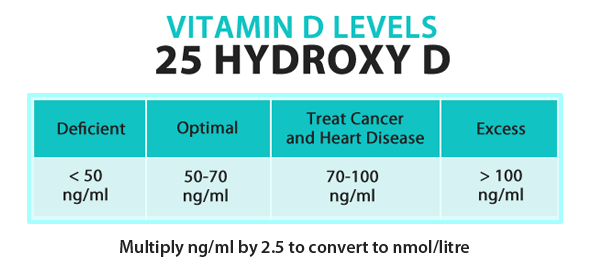
At present, based on the evaluation of healthy populations that get plenty of natural sun exposure, the optimal range for general health appears to be somewhere between 50 and 70 ng/ml, or 125-175 nmol/L—a far cry from the threshold suggested in this study.
vitamin d levels
References for target ranges

Sun Exposure Is the Ideal Way to Optimize Your Vitamin D Level

I believe sensible sun exposure is the ideal way to optimize your vitamin D levels. As a general rule, you’ll want to expose large amounts of bare skin to the sun until it turns the lightest shade of pink, if you’re light-skinned.
This typically occurs in about half the time it would normally take you to burn. So if you know you tend to get sunburned after 30 minutes, you’d want to stay in the sun for about 15 minutes.
Those with darker skin may need to pay closer attention to notice when this slight reddening occurs. It’s really impossible to give any firm recommendations for how long you need to stay in the sun to optimize vitamin D production, as it varies greatly depending on a number of factors, such as:
Antioxidant levels and diet in general Age
Skin color and/or current tan level Use of sunscreen
Latitude and altitude (elevation) Cloud cover and pollution
Ozone layer Surface reflection
Season Time of day
Weight Altitude

Other Alternatives: UVB emitting lights or Supplements

Your second-best option would be to use lights that emit UVB.
If your circumstances prevent either of these strategies, then you’re left with taking a vitamin D supplement. GrassrootsHealth has a helpful chart showing the average adult dose required to reach healthy vitamin D levels based upon your measured starting point. Many experts agree that 35 IUs of vitamin D per pound of body weight could be used as an estimate for your ideal dose.
Be sure to take vitamin D3—not synthetic D2—and take vitamin K2 in conjunction with it. The biological role of vitamin K2 is to help move calcium into the proper areas in your body, and without sufficient amounts, calcium may build up in areas such as your arteries and soft tissues.

This can cause calcification that can lead to hardening of your arteries—a side effect previously thought to be caused by vitamin D toxicity. We now know that inappropriate calcification is actually due more to lack of K2 than simply too much vitamin D.

Magnesium Is Also Important for Vitamin D Activity

Magnesium is another important player—both for the proper function of calcium, and for the activity of vitamin D, as it converts vitamin D into its active form. Magnesium also activates enzyme activity that helps your body use the vitamin D. In fact, all enzymes that metabolize vitamin D require magnesium to work. Magnesium also appears to play a role in vitamin D’s immune-boosting effects. As noted by magnesium expert Dr. Carolyn Dean, MD, ND:6
“The effectiveness and benefits of vitamin D are greatly undermined in the absence of adequate levels of magnesium in the body. Magnesium acts with and is essential to the activity of vitamin D, and yet most Americans do not get their recommended daily allowance (RDA) of this important mineral.”
As with vitamin D and K2, magnesium deficiency is also common, and if you’re lacking in magnesium and take supplemental calcium, you may exacerbate the situation. Vitamin K2, magnesium, calcium, and vitamin D all work in tandem with each other, which is why it’s important to pay attention to their ratios. Vitamin A, zinc, and boron are other important cofactors that interact with vitamin D, and indeed, zinc deficiency has also been identified as a contributing factor to Alzheimer’s disease.
When taking supplements, it can be easy to create lopsided ratios, so getting these nutrients from an organic whole food diet and sensible sun exposure is generally your best bet. Dietary sources of magnesium include sea vegetables, such as kelp, dulse, and nori. Vegetables can also be a good source. As for supplements, magnesium citrate and magnesium threonate are among the best.

My Alzheimer’s Prevention Strategies

Because there are so few treatments for Alzheimer’s, and no available cure, you’re really left with just one solid solution, and that is to prevent it from happening to you in the first place. Diet is part and parcel of a successful prevention plan, and my optimized nutrition plan can set you on the right path in this regard. As explained by neurologist Dr. David Perlmutter, author of the book, Grain Brain, Alzheimer’s is a disease predicated primarily on lifestyle choices; the two main culprits being excessive sugar and gluten consumption.
Another major factor is the development and increased consumption of genetically engineered (GE) grains, which are heavily contaminated with glyphosate—a herbicide thought to be worse than DDT, and DDT has already been linked to the development of Alzheimer’s... GE sugar and grains are now pervasive in most processed foods sold in the US, so swapping out processed fare for whole foods is an important part of the equation. In terms of your diet and other lifestyle factors, the following suggestions may be among the most important for Alzheimer’s prevention:
  • Avoid sugar and refined fructose. Ideally, you’ll want to keep your sugar levels to a minimum and your total fructose below 25 grams per day, or as low as 15 grams per day if you have insulin/leptin resistance or any related disorders
  • Avoid gluten and casein (primarily wheat and pasteurized dairy, but not dairy fat, such as butter). Research shows that your blood-brain barrier is negatively affected by gluten. Gluten also makes your gut more permeable, which allows proteins to get into your bloodstream, where they don’t belong. That then sensitizes your immune system and promotes inflammation and autoimmunity, both of which play a role in the development of Alzheimer’s
  • Optimize your gut flora by regularly eating fermented foods or taking a high-potency and high-quality probiotic supplement.
  • Increase consumption of all healthy fats, including animal-based omega-3. Healthy fats that your brain needs for optimal function include organically-raised grass-fed meats, coconut oil, olives and olive oil, avocado, nuts, organic pastured egg yolks, and butter made from raw grass-fed milk. High intake of the omega-3 fats EPA and DHA are also helpful for preventing cell damage caused by Alzheimer's disease, thereby slowing down its progression, and lowering your risk of developing the disorder.
  • Reduce your overall calorie consumption, and/or intermittently fast. Ketones are mobilized when you replace carbs with coconut oil and other sources of healthy fats. As mentioned above intermittent fasting is a powerful tool to jumpstart your body into remembering how to burn fat and repair the inulin/leptin resistance that is also a primary contributing factor for Alzheimer’s. To learn more, please see this previous article.
  • Improve your magnesium levels. Preliminary research strongly suggests a decrease in Alzheimer symptoms with increased levels of magnesium in the brain. Unfortunately, most magnesium supplements do not pass the blood brain levels, but a new one, magnesium threonate, appears to and holds some promise for the future for treating this condition and may be superior to other forms.
  • Eat a nutritious diet, rich in folate. Vegetables, without question, are your best form of folate, and we should all eat plenty of fresh raw veggies every day. Avoid supplements like folic acid, which is the inferior synthetic version of folate.
  • Exercise regularly. It's been suggested that exercise can trigger a change in the way the amyloid precursor protein is metabolized,7 thus, slowing down the onset and progression of Alzheimer's. Exercise also increases levels of the BDNF, (brain derived neurotropic factor) and PGC-1alpha. Research has shown that people with Alzheimer's have less PGC-1alpha in their brains and cells that contain more of the protein produce less of the toxic amyloid protein associated with Alzheimer's. I would strongly recommend reviewing the Peak Fitness Technique for my specific recommendations.
  • Optimize your vitamin D levels with safe sun exposure. Sufficient vitamin D is imperative for proper functioning of your immune system to combat inflammation that is also associated with Alzheimer's.
  • Avoid and eliminate mercury from your body. Dental amalgam fillings, which are 50 percent mercury by weight, are one of the major sources of heavy metal toxicity. However, you should be healthy prior to having them removed. Once you have adjusted to following the diet described in my optimized nutrition plan, you can follow the mercury detox protocol and then find a biological dentist to have your amalgams removed.
  • Avoid and eliminate aluminum from your body: Sources of aluminum include antiperspirants, non-stick cookware, vaccine adjuvants, etc. For tips on how to detox aluminum, please see my article, “First Case Study to Show Direct Link between Alzheimer’s and Aluminum Toxicity.”
  • Avoid flu vaccinations as most contain both mercury and aluminum, well-known neurotoxic and immunotoxic agents.
  • Avoid anticholinergics and statin drugs. Drugs that block acetylcholine, a nervous system neurotransmitter, have been shown to increase your risk of dementia. These drugs include certain nighttime pain relievers, antihistamines, sleep aids, certain antidepressants, medications to control incontinence, and certain narcotic pain relievers. Statin drugs are particularly problematic because they suppress the synthesis of cholesterol, deplete your brain of coenzyme Q10 and neurotransmitter precursors, and prevent adequate delivery of essential fatty acids and fat-soluble antioxidants to your brain by inhibiting the production of the indispensable carrier biomolecule known as low-density lipoprotein.
  • Challenge your mind daily. Mental stimulation, especially learning something new, such as learning to play an instrument or a new language, is associated with a decreased risk of Alzheimer's. Researchers suspect that mental challenge helps to build up your brain, making it less susceptible to the lesions associated with Alzheimer's disease.
  • Avoid electromagnetic fields (EMF) created by wireless devices. The BioInitiative Report,8 initially published in 2007, and again in 2012 by an international working group of scientists, researchers, and public health policy professionals, concluded that the existing standards for public safety are completely inadequate to protect your health. The report includes evidence that electromagnetic fields and exposure to radiofrequencies can have a detrimental impact on Alzheimer’s disease, along with a whole host of other chronic health problems.

How Vitamin D Performance Testing Can Help Optimize Your Health

A robust and growing body of research clearly shows that vitamin D is absolutely critical for good health and disease prevention. Vitamin D affects your DNA through vitamin D receptors (VDRs), which bind to specific locations of the human genome. Scientists have identified nearly 3,000 genes that are influenced by vitamin D levels, and vitamin D receptors have been found throughout the human body.
Is it any wonder then that no matter what disease or condition is investigated, vitamin D appears to play a crucial role? This is why I am so excited about the D*Action Project by GrassrootsHealth. Dr. Heaney is the research director of GrassrootsHealth and is part of the design of the D*action Project as well as analysis of the research findings. GrassrootsHealth shows how you can take action today on known science with a consensus of experts without waiting for institutional lethargy. It has shown how by combining the science of measurement (of vitamin D levels) with the personal choice of taking action and, the value of education about individual measures that one can truly be in charge of their own health.
In order to spread this health movement to more communities, the project needs your involvement. This was an ongoing campaign during the month of February, and will become an annual event.
To participate, simply purchase the D*Action Measurement Kit and follow the registration instructions included. (Please note that 100 percent of the proceeds from the kits go to fund the research project. I do not charge a single dime as a distributor of the test kits.)
As a participant, you agree to test your vitamin D levels twice a year during a five-year study, and share your health status to demonstrate the public health impact of this nutrient. There is a $65 fee every six months for your sponsorship of this research project, which includes a test kit to be used at home, and electronic reports on your ongoing progress. You will get a follow up email every six months reminding you "it's time for your next test and health survey."

Saturday, June 6, 2015

Your Body is Acidic and Here Is Homemade Remedy to Reach a Proper pH Balance

Reposted from The Health and Love Page

http://www.healthandlovepage.com/homemade-remedy-to-reach-proper-ph-balance/

(HealthAndLovePage) Your bodies have a specific acid-alkaline balance. The pH levels affect not only your cells, but also the quality of soil, ocean life and many other things.
pH is a term used to describe potential hydrogen – a measure of hydrogen ions in a given solution. When it comes to human body, the solutions are actually the tissues and fluids found in your body.


In order to measure how alkaline or acidic certain substance is, scientists have developed a pH scale that ranges from 0 to 14. Seven is the neutral value. Above seven the substance becomes very alkaline while below seven it becomes progressively more acidic.
It is good to mention that the proper pH balance depends on the part of the body we are measuring. The skin, bowels and vagina should be slightly above seven. In this way, the bacteria that often attack these body parts won’t get the chance to reach them.

It is natural for saliva to be more alkaline and the urine is typically more acidic. Our body interacts with acids on a daily basis because many acids are actually by-products of metabolism, respiration, exercise and cellular breakdown.
When it comes to our health, measuring the pH value of our blood is certainly the most important activity. In order to secure the best cellular health, you must have blood pH that is only slightly alkaline – the pH should be between 7.36 and 7.4. It is crucial to understand how the body manages to keep this proper pH balance. This is not something that happens without a reason because the body is focused on creating conditions to reach this balance.
There are many people who keep their cells above the recommended acidic value (without an intention) by consuming processed foods, foods with a lot of sugar and animal products created on factory farms.


This type of dieting will certainly leave some negative effects on the body over time. The organs that are affected the most are the liver, kidneys and digestive system in general. Allergies, inflammation, skin problems, arthritis, bowel issues, constipation, stress (both mental and physical) and certain chronic diseases like cancer and diabetes are great “fans” of this type of diet.
Increased acidity also prepares a fertile ground for bad bacteria (fungus and yeast for example) and for some viruses that can cause a lot of problems to our health.
That’s why, having a proper pH balance is one of the most important things for those who want to be healthy.

Homemade Remedy to Reach a Proper pH Balance

Ingredients:

Instructions:

Mix all the ingredients together. The combination will start to fizz right away.
Keep adding baking soda until you notice that the fizz stops and then pour 8 ounces of filtered water in the glass. Sit down and drink the solution.

This simple remedy will help you reach proper pH balance and create the perfect alkaline-forming environment in the system.

Via Organic Health


Monday, June 1, 2015

The Best Fish for Your Health and the Earth

Reposted from Dr. Mercola

http://articles.mercola.com/sites/articles/archive/2015/06/01/best-seafood.aspx?x_cid=20150601_nonlead2_best-seafood_facebookdoc

Fish has always been the best source for the animal-based omega-3 fats EPA and DHA, but as levels of pollution have increased you have to be very choosy about which types of seafood you decide to eat.
If you’re not careful, the toxic effects from the pollutants in the fish will outweigh the benefits of the omega-3 fats. Meanwhile, many fish species have been overfished and are dangerously depleted. When choosing seafood for your family, it’s important to take not only your health into consideration but also that of the environment. As reported by National Geographic:1
“Fisheries for the most sought-after species, like orange roughy, Chilean sea bass, and bluefin tuna have collapsed. In 2003, a scientific report estimated that industrial fishing had reduced the number of large ocean fish to just 10 percent of their pre-industrial population.
Faced with the collapse of large-fish populations, commercial fleets are going deeper in the ocean and farther down the food chain for viable catches. This so-called ‘fishing down’ is triggering a chain reaction that is upsetting the ancient and delicate balance of the sea's biologic system.
A study of catch data published in 2006 in the journal Science grimly predicted that if fishing rates continue apace, all the world's fisheries will have collapsed by the year 2048.”

Why Farmed Fish Are Not a Good Option

Industrial fish farming, or aquaculture, is the fastest growing form of food production in the world.2 About half of the world’s seafood comes from fish farms, including in the US, and this is expected to increase. At first glance, farmed fish may seem like a good idea to help protect wild seafood populations from overfishing.
In reality, however, the industry is plagued with many of the same problems surrounding land-based concentrated animal feeding operations (CAFOs), including pollution, disease, and inferior nutritional quality.
It’s getting so bad that fish farms can easily be described as “CAFOs of the sea.” Many farmed fish are fed genetically modified (GM) corn and soy, which is a completely unnatural diet for marine life. Others are fed fishmeal, which is known to accumulate industrial chemicals like PCBs and dioxins.
Fish waste and uneaten feed litter the sea floor beneath these farms, generating bacteria that consume oxygen vital to shellfish and other bottom-dwelling sea creatures. Farmed fish waste promotes algal growth that harms the water’s oxygen content, posing risks to coral reefs and other aquatic life.
The close quarters where farmed fish are raised (combined with their unnatural diets) means disease can spread quickly, and because farmed fish are often raised in pens in the ocean, pathogens can spread like wildfire and contaminate any wild fish swimming past.
Concentrated antibiotics, pesticides, and other chemicals are also commonly used to fight diseases and parasites common to fish farms. One study found a drug used to kill sea lice also kills other marine invertebrates, can travel up to half a mile and persists in the water for hours…3

Farmed Fish May Contain Fewer Healthy Fats

If you’re eating fish you’re probably doing so, in part, to take advantage of their beneficial omega-3 fats. Fish in the wild, especially oily fish such as salmon, are a rich source of omega-3 fats. But levels of critical omega-3 fats may be reduced by about 50 percent in farmed salmon, compared to wild salmon, due to increasing amounts of grain feed.
That being said, farmed salmon are much fattier overall than wild salmon. The economic incentive to speed the growth of farmed salmon has led to the use of increasingly high-energy diets, which is why farmed grow so big.
High fat itself is not a problem, but what comprises that fat IS the problem. Farmed salmon are much higher in omega-6 fat—almost five times higher—and the typical American already gets 10 to 20 times too much omega-6 as they need.
It’s not only farmed salmon that has an unfavorable ratio of fats, either. One study published in the Journal of the American Dietetic Association found farmed tilapia and farmed catfish also have much lower concentrations of omega-3s and very high ratios of omega-6 fats to omega-3 fats. According to the study:4
“Taken together, these data reveal that marked changes in the fishing industry during the past decade have produced widely eaten fish that have fatty acid characteristics that are generally accepted to be inflammatory by the health care community.”
Further, when researchers looked into the effect of farmed trout on cardiovascular risk markers in men, they found trout raised on vegetable-based feed had a less pronounced impact on omega-3 levels.5

Farmed Fish May Be More Contaminated Than Wild-Caught Fish

Farmed salmon also has much higher concentrations of persistent, bioaccumulative contaminants than wild salmon.6 Scientists have concluded:7
"Consumption of farmed salmon at relatively low frequencies results in elevated exposure to dioxins and dioxin-like compounds with commensurate elevation in estimates of health risk."
In a global assessment of farmed salmon published in the January 2004 issue of Science, 13 persistent organic pollutants were found.8 Some of the most dangerous are PCBs, strongly associated with cancer, reproductive, and other health problems. PCB concentrations in farmed salmon were found to be eight times higher than in wild salmon.
Those contamination levels are deemed safe by the Food and Drug Administration (FDA) but not by the Environmental Protection Agency (EPA). Researchers postulated that if EPA guidelines were applied to the farmed salmon they tested, recommendations would be to restrict salmon consumption to no more than once per month.
Certain types of farmed fish, including farmed catfish imported from China and farmed shrimp from China, India, Malaysia, Mexico, Vietnam, Bangladesh, and Indonesia are on the US Food and Drug Administration’s (FDA) watch list for illegal drug residues, including antibiotics and anti-fungal compounds.9

Most Shrimp Is Farmed… and Should Be Avoided

Shrimp is the most popular seafood in the US, but the vast majority of shrimp (over 90 percent) come from industrial shrimp farms off the coasts of India, Indonesia, Thailand, Vietnam, and other countries where industry regulations may be less strict than in the US.
For example, the US does not permit the use of antibiotics in shrimp farming, but many other nations use antibiotics in their operations. It’s illegal to import shrimp raised on antibiotics into the US.

But in one recent study Consumer Reports detected antibiotics in 11 of 342 samples of imported raw farmed shrimp.10 A lack of enforcement of the laws is part of the problem. Bacteria were also detected on 60 percent of the shrimp tested, including bacteria that can cause staph infection and food poisoning, which is suggestive of poor hygiene among food processors.
Aside from potential contamination, farmed shrimp is unsustainable. Carnivorous sea animals such as prawns need fish in their diet, and dwindling fish stocks in the wild has led to illegal fishing; some of it within national park waters off the coast of Thailand—an area that now supplies much of the fish meal to feed factory farmed animals, including farmed shrimp and prawns.
Trawling for “trash fish” along the coast of Southeast Asia to meet the demand for shrimp feed is having devastating effects on the ecosystem. All sorts of tropical fish, and even rare shark species, sea sponges, starfish, and octopi end up as fish feed in this process.

They also catch small, immature fish reduces overall fish stocks, as bigger fish are left without a suitable food source. The end result is rapidly decreasing fish stocks for human consumption.
In short, the entire balance in nature is being destroyed. Illegal toxic pesticides are also routinely used to farm shrimp in some of these areas, including endosulfan, a broad-spectrum insecticide that is banned in more than 80 countries due to its environmental and human toxicity.

Shrimp Products Are Often Misrepresented

Adding to the controversy, it’s not always possible to tell whether the shrimp you’re eating is farm-raised or wild-caught. A 2014 report by the ocean conservation group Oceana revealed that over 30 percent of shrimp products sold in US grocery stores and restaurants are misrepresented.11 Fifteen percent were mislabeled in regard to production method (farm-raised or wild-caught) or species.
Farmed species were often labeled as “Gulf shrimp,” and different species were often mixed together in one bag, or otherwise mislabeled. One sample of frozen shrimp salad even contained a type of aquarium pet shrimp that is not intended for human consumption.
Ironically, if you’re looking for wild-caught shrimp, you may be best off purchasing products labeled simply as “shrimp,” as two-thirds of such packages contained wild-caught Gulf shrimp, while more than one-third of those labeled as “Gulf shrimp” were actually farm-raised. Assuming it’s labeled accurately, wild shrimp is a generally healthy and sustainable choice, but this excludes wild shrimp caught in Mexico or Louisiana. According to the Monterey Bay Aquarium’s Seafood Watch program:12
“Wild shrimp from Louisiana and Mexico are on the ‘Avoid’ list for poor management, illegal fishing or heavy bycatch loads that include sea turtles and many other species.”

Why You Should Be Wary of Canned and Sushi Tuna

The larger a fish is, the longer it has lived and the more time it has had to bioaccumulate toxins like mercury from the ocean. One study from the US Geological Survey found that ALL tuna tested contained fairly high amounts of mercury. The contamination may be even worse in restaurants, which suggests that eating restaurant tuna is a risky proposition. In a separate study, toxicological testing revealed that tuna sold in restaurants actually contained HIGHER amounts of mercury than the store-bought variety.13
The reason for this is because restaurants tend to favor certain species of tuna, such as bluefin akami and bigeye tuna, which had significantly higher levels of mercury than bluefin toro and yellowfin tuna. Unfortunately, mercury tends to accumulate to a greater degree in muscle than in fat, rendering these highly prized, leaner species of tuna more susceptible to high contamination. As for canned tuna, albacore has been found to contain about three times more mercury than light chunk tuna (0.353 ppm vs. 0.118 ppm).14
Independent testing by the Mercury Policy Project found that the average mercury concentration in albacore canned tuna was typically even greater than that, with most samples exceeding 0.5 ppm.15 The rate of mercury contamination in tuna and other Pacific fish increased 30 percent between 1990 and 2009. About 40 percent of all US exposure to mercury comes from eating contaminated tuna from the Pacific, and roughly 75 percent of all human exposure to mercury in general comes from eating fish.
Not to mention, like shrimp, tuna is also often mislabeled. According to Oceana, nearly 60 percent of the fish labeled "tuna" in the US is not actually tuna.16 And, 84 percent of “white tuna” sold in sushi venues was actually escolar, a fish associated with acute and serious digestive effects if you eat just a couple of ounces.

What Are the Best Fish to Eat?

Among the safest in terms of contamination, and the highest in healthy omega-3 fat, is wild-caught Alaskan and sockeye salmon. Neither is allowed to be farmed, and are therefore always wild-caught. The risk of sockeye accumulating high amounts of mercury and other toxins is reduced because of its short life cycle, which is only about three years.
Additionally, bioaccumulation of toxins is also reduced by the fact that it doesn't feed on other, already contaminated, fish. The two designations you want to look for on the label are: “Alaskan salmon” (or wild Alaskan salmon) and “Sockeye salmon.”
Canned salmon labeled "Alaskan salmon" is also a good choice and offers a less expensive alternative to salmon fillets. A general guideline is that the closer to the bottom of the food chain the fish is, the less contamination it will have accumulated, so other safer choices include smaller fish like sardines, anchovies, and herring. Sardines, in particular, are one of the most concentrated sources of omega-3 fats, with one serving containing more than 50 percent of your recommended daily value.17
They also contain a wealth of other nutrients, from vitamin B12 and selenium to protein, calcium, and choline, making them one of the best dietary sources of animal-based omega-3s. From a sustainability perspective, you’ll want to avoid Atlantic sardines that come from the Mediterranean in favor of Pacific sardines. According to the Seafood Watch program:18
“As a result of ineffective management and overfishing, consumers should ‘avoid’ Atlantic sardines from the Mediterranean. Instead, choose the relatively abundant and well-managed Pacific sardines from U.S. waters - a Seafood Watch ‘Best Choice.’”
Finally, no matter what type of fish you’re considering, look for varieties that have received the Marine Stewardship Council (MSC) certification. This certification assures that every component of the manufacturing process – from how the raw materials are harvested to how the product is manufactured – has been scrutinized by MSC and has been independently audited to ensure it meets sustainable standards.
All of my krill products, for example, are MSC certified, allowing you to track where the krill oil came from in the Antarctic Ocean, as each batch of krill is carefully monitored all the way through, from catch to sale. Seafood Watch can also guide you in the direction of more sustainable seafood choices. They have a searchable database to find more sustainable seafood options, and they even offer a Sustainable Seafood app for your smartphone. Other labels that signify more sustainable products include:
  • Whole Foods Market Responsibly Farmed 3rd Party certification
  • Fishwise: The Fishwise label identifies how the fish was caught, where it came from, and whether the fish is sustainable (or environmentally threatened).
  • Seafood Safe: The Seafood Safe label involves independent testing of fish for contaminants, including mercury and PCBs, and recommendations for consumption based upon the findings.